
OpenAI Codex Goal Mode Explained: 2026 Guide to Appshots, Remote Locked Use, and Safer Long-Running Coding Agents
If you have seen developers talking about Codex /goal, Appshots, or locked Mac workflows, this guide explains what changed, when to use each feature, and how to keep long-running AI coding sessions safe enough for real projects.
Quick answer: what changed with OpenAI Codex Goal Mode?
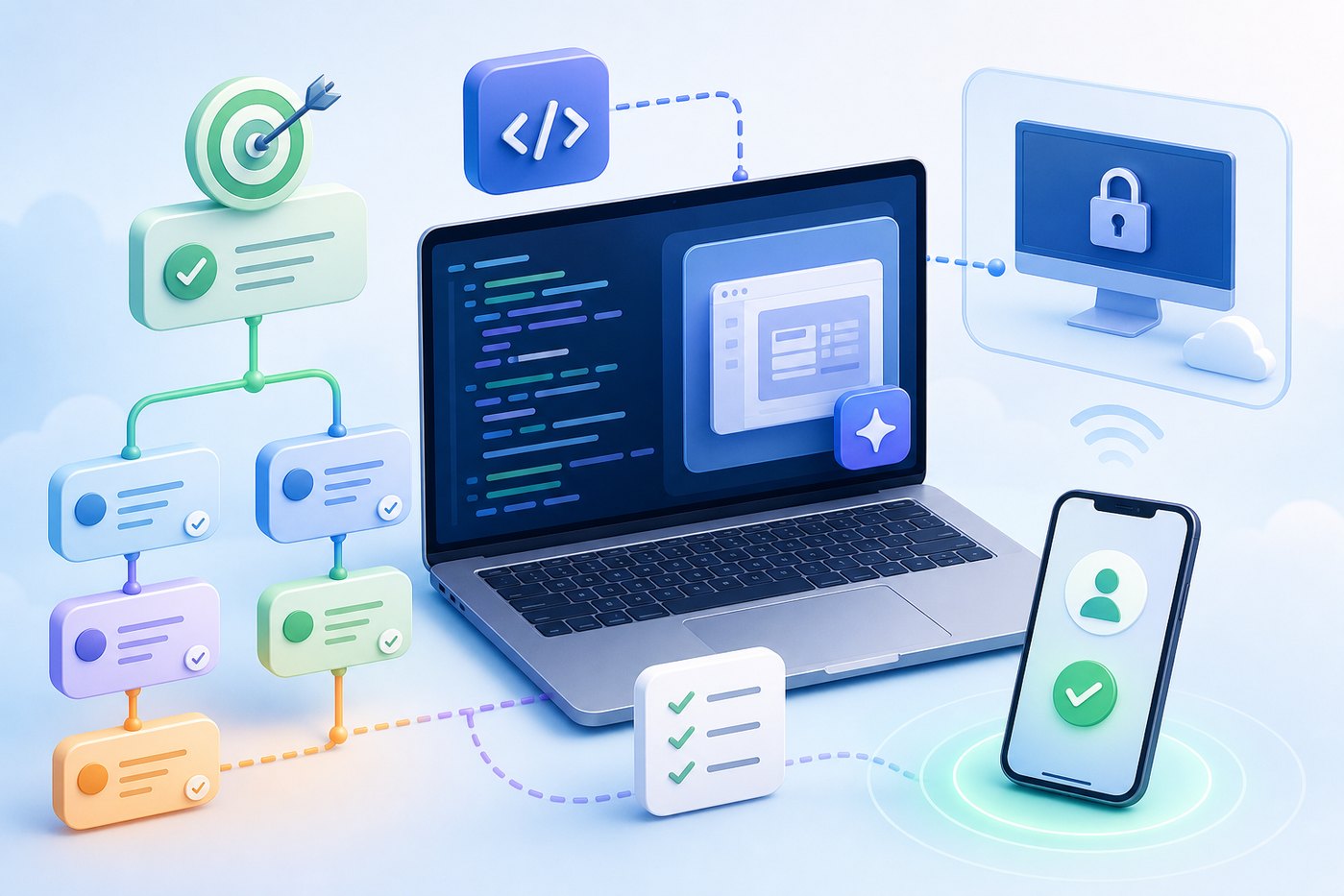
OpenAI Codex Goal Mode is the most practical way to turn Codex from a one-shot coding helper into a supervised, long-running coding agent. Instead of asking for a single patch, you define the outcome, the success checks, and the constraints that must stay intact. Codex can then investigate, edit, run commands, test assumptions, and keep working until the goal is complete, paused, or stopped by your limits.
The May 2026 Codex update matters because Goal Mode now sits beside two important context and mobility features: Appshots, which help Codex understand what is happening on your Mac screen, and remote locked computer use, which lets eligible Mac workflows continue while you supervise from elsewhere. Together, these features make Codex feel less like autocomplete and more like a practical development operator.
Why this topic is worth a pillar guide now
AI Feature Drop already has an OpenAI Codex pricing and usage-limits guide, so this article deliberately avoids repeating that topic. The new search opportunity is workflow-specific: developers are trying to understand when to use /goal, how Appshots improve context, and whether locked-use workflows are safe enough for real projects.
The latest usable GA4 report for the site showed early engagement with the OpenAI label and the previous Codex pricing article, while GSC data remains sparse. That means the right SEO move is not to chase a huge broad keyword. It is to publish a clear, practical guide around a fresh feature cluster before the SERP fills with generic summaries. OpenAI’s own release notes and developer materials provide the facts; user discussions provide the pain points; this article provides the decision framework.
Search intent around Codex is also becoming more operational. People are not only asking “what is Codex?” They are asking how to keep a coding agent on task, how to approve risky actions from a phone, how to give it screen context without oversharing, and how to avoid waking up to a pile of unreviewed changes. Those questions deserve an answer-first pillar page.
What is Codex Goal Mode?
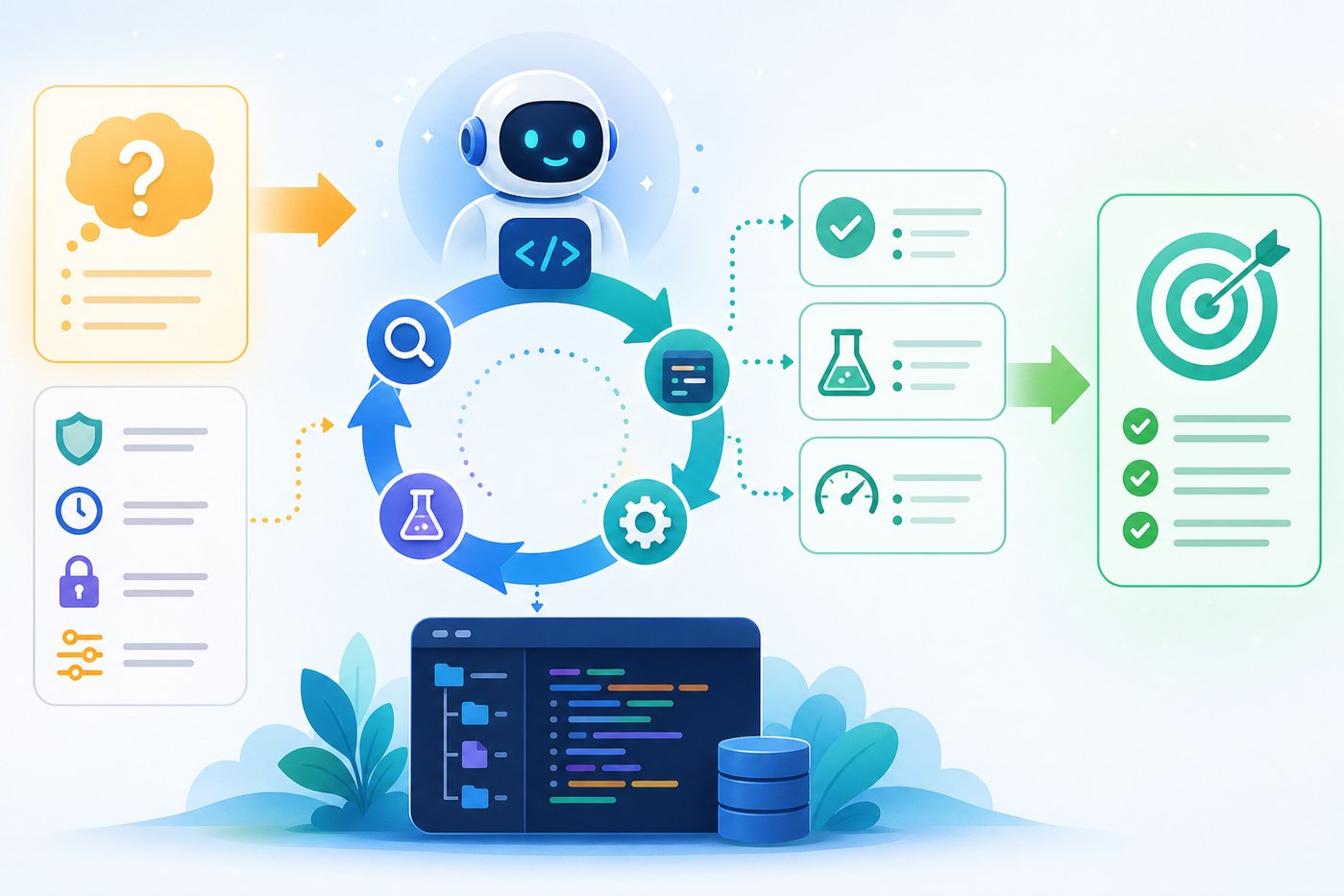
Codex Goal Mode is a way to give Codex a persistent objective. A good goal says what should be true at the end, how Codex should verify success, and which boundaries it must respect while working. The important difference is that the goal remains active across intermediate steps. If a test fails, Codex can inspect the failure, revise the patch, rerun a narrower command, and continue without you restating the target every time.
Think of it as a lightweight project brief for an AI coding agent. A normal prompt might say, “fix the login bug.” A goal says, “reproduce the login bug from issue 183, identify the smallest safe fix, add or update tests that fail before the fix and pass after it, avoid changing authentication providers, and summarize the diff with commands run.” The second version gives Codex a finish line, a verification method, and guardrails.
OpenAI’s developer guidance describes goals as useful when the next step depends on what Codex learns along the way. That is exactly the shape of real engineering work: profiling a slow route, tracing a flaky test, comparing two implementations, reviewing migration risks, or turning an unclear bug report into a confirmed root cause.
A practical Codex Goal Mode template
Use this structure whenever you want Codex to run a longer task. The exact interface may vary across the Codex app, IDE extension, and CLI, but the information architecture stays the same.
Goal: [specific outcome]
Context: [repo/app area, issue link, files, environment]
Success checks: [tests, command output, screenshots, benchmark, manual acceptance criteria]
Constraints: [files not to touch, APIs not to change, security limits, style rules]
Allowed actions: [read, edit, run tests, create branch, inspect browser, ask before install]
Stop conditions: [pause before destructive action, stop after budget, stop if uncertainty is high]
Final report: [diff summary, commands run, remaining risks, next steps]
Here is a stronger example:
Goal: Fix the settings page save failure without changing the public API.
Context: The bug appears when a user changes notification preferences in the web app.
Success checks: Add a regression test, run the focused test file, and verify the settings page saves in the local browser.
Constraints: Do not alter billing code, do not change database migrations, and ask before installing packages.
Stop conditions: Pause if credentials are needed or if the fix requires a schema change.
Final report: Explain root cause, files changed, tests run, and any follow-up risk.
This prompt does more than request a patch. It reduces ambiguity, prevents scope creep, and creates a reviewable trail. For SEO and developer usefulness, this is the core insight: the quality of Goal Mode depends less on magic and more on engineering discipline.
Codex Appshots: when screenshots beat more typing
Appshots are useful because not every coding task begins inside a clean repository file. Sometimes the key clue is a browser rendering problem, a modal that only appears after a click, a local desktop app state, a simulator screen, a visual regression, or an error message that is annoying to copy. Appshots help Codex understand visible context so you do not have to write a miniature novel about what you are seeing.
The safe way to use Appshots is to treat them like a screenshot you would send a colleague. Before sharing one with Codex, ask: does the visible screen contain private customer data, credentials, internal URLs, unreleased strategy, or personal messages? If yes, switch to a redacted reproduction or a local fixture. More context is useful only when it is relevant and safe.
Appshots are especially strong for UI and browser workflows: explaining that a button is misaligned, showing a chart overflow, pointing to a bad loading state, or capturing a styling bug. They are less useful for hidden backend behavior where logs, tests, and source files are more precise.
| Input method | Best for | Risk | Tip |
|---|---|---|---|
| Normal prompt | Small edits, explanations, focused refactors | Low if context is minimal | Keep the request narrow |
| Repository context | Code changes, tests, dependency analysis | Medium if secrets are checked in | Use clean repos and ignore sensitive files |
| Appshots | Visual bugs, GUI state, browser previews | Medium if screen contains private data | Review the visible screen before sending |
| Remote locked use | Long-running supervised desktop workflows | Higher without guardrails | Use approvals, test environments, and audit logs |
Remote locked computer use: powerful, but not “set and forget”
Remote locked computer use is the feature that attracts the most attention because it sounds like an autonomous employee running your Mac while you are away. The practical interpretation should be more conservative: it is a supervised automation workflow for eligible Mac users, designed to keep useful work moving when the computer is locked and you are reviewing or approving remotely.
The most valuable scenarios are controlled and reversible. Codex can continue a test run, inspect a local app, collect evidence, prepare a patch, or wait for your approval from mobile. The less suitable scenarios are destructive, credential-heavy, legally sensitive, or production-facing. If a task would make you nervous to delegate to a junior engineer without a pull request, it should not be handed to a long-running agent without stronger controls.
OpenAI’s broader “work with Codex from anywhere” direction also includes mobile review and approval patterns, access tokens for enterprise environments, and hooks that can validate prompts, log activity, or customize behavior. That is the right mental model: Codex is becoming part of a governed workflow, not a replacement for governance.
Good locked-use tasks
- Running a long test suite on a feature branch.
- Reproducing a UI bug in a local app.
- Collecting logs and screenshots for review.
- Preparing a non-production pull request.
- Continuing a Codex thread while you approve from mobile.
Risky locked-use tasks
- Changing production data.
- Handling secrets or customer records on screen.
- Installing unknown packages without approval.
- Making billing, auth, or compliance changes unsupervised.
- Running broad shell commands without a rollback plan.
A safer workflow for long-running Codex agents

Start with a branch, not your main line. Give Codex a focused goal, a limited workspace, and a verification command. If the task needs browser or desktop access, use a local environment with fake data. If it needs credentials, prefer read-only or short-lived credentials, and make Codex pause before using anything sensitive.
Next, require evidence. A good Codex final report should include the root cause, files changed, tests run, commands that failed, commands that passed, screenshots if relevant, and remaining uncertainty. Do not accept “done” as evidence. Accept a diff, test output, and a clear explanation.
Finally, review like a human produced the code. Check for overbroad changes, hidden assumptions, dependency drift, untested paths, and security regressions. Goal Mode can reduce repetitive supervision, but it does not remove the need for engineering review. In fact, the better Codex gets at making larger changes, the more important structured review becomes.
- Create a narrow goal. One bug, one benchmark, one migration check, or one UI flow.
- Define success checks. Tests, build, lint, browser verification, or reproducible manual steps.
- Limit permissions. Pause before installs, secrets, destructive commands, external writes, or production access.
- Use Appshots carefully. Share visual context only after checking the screen for sensitive content.
- Supervise remotely. Approve meaningful actions from mobile instead of allowing unlimited autonomy.
- Review the output. Treat the result as a pull request, not as a guaranteed fix.
Five practical Codex Goal Mode examples
1. Reproduce and fix a flaky test
Goal Mode works well when Codex must run a test several times, inspect logs, isolate timing assumptions, and propose the smallest fix. Ask it to preserve the test’s intent and report every command it ran.
2. Improve a slow route
Give Codex a performance target and a benchmark command. Tell it not to change public behavior, then ask for before-and-after evidence. This is better than saying “make it faster,” which invites risky rewrites.
3. Patch a UI regression using Appshots
Use an Appshot to show the visual problem, then ask Codex to identify the CSS or component source, patch the layout, and provide a screenshot or local verification steps.
4. Audit a migration plan
Ask Codex to inspect affected files, identify backward-compatibility risks, and produce a checklist before making edits. In this scenario the goal may be an evidence-backed report, not code.
5. Continue a supervised mobile workflow
If Codex is running a long task on a Mac, use mobile supervision to approve safe next steps, review intermediate evidence, and stop the run if it crosses the agreed boundary.
Codex Goal Mode vs normal Codex prompts vs Claude Code
The right tool depends on task shape. A normal Codex prompt is still best for quick edits and explanations. Goal Mode is best for a verifiable objective where Codex may need to keep exploring. Claude Code and other coding agents may have different strengths around terminal-first workflows, context files, or subscription limits. The practical decision is not “which agent is smartest?” It is “which workflow gives me the best combination of context, control, cost, and reviewability?”
| Workflow | Best fit | Control level | Main risk |
|---|---|---|---|
| Normal Codex prompt | Small patches, explanations, one-off tasks | High because scope is short | Under-specified requests |
| Codex Goal Mode | Multi-step tasks with clear success checks | Medium to high with good stop conditions | Scope creep if the goal is vague |
| Codex with Appshots | Visual bugs and GUI context | Medium | Oversharing visible data |
| Codex remote locked use | Long-running supervised Mac workflows | Depends on approvals and permissions | Unreviewed actions if guardrails are weak |
| Claude Code-style terminal workflows | Repo-heavy agent sessions and command-line iteration | Depends on setup | Usage-limit burn and broad tool access |
For internal linking, pair this article with the existing OpenAI Codex pricing and usage limits guide and the Claude Code usage limits guide. Those pages answer the cost and capacity questions that naturally follow from longer agent sessions.
Limitations and mistakes to avoid
The biggest mistake is writing a goal that cannot be verified. “Improve the app” is not a goal. “Reduce checkout page load time by identifying the top cause, applying one safe fix, and running the existing performance check” is a goal. If Codex cannot tell whether it is done, it will either stop too early or keep wandering.
The second mistake is over-trusting screen context. Appshots can be valuable, but visual context is not the same as source-of-truth data. Use it to point Codex in the right direction, then require code, tests, logs, or documentation to confirm the fix.
The third mistake is treating locked use as permission to leave the agent unsupervised with sensitive resources. Locked use should reduce friction, not eliminate approvals. If a workflow includes secrets, real customer data, production dashboards, or irreversible writes, require human approval and ideally move the work to a safer environment.
The fourth mistake is ignoring cost and capacity. Long-running tasks may consume more plan resources than short prompts. If your team adopts Goal Mode heavily, track usage, set expectations, and reserve agent sessions for work that genuinely benefits from iterative investigation.
Bottom line: how to think about Codex Goal Mode in 2026
OpenAI Codex Goal Mode is a meaningful step toward agentic software work because it gives Codex a durable objective. Appshots improve context when the problem is visible. Remote locked use and mobile supervision make longer workflows easier to manage. But the value comes from structure: clear goals, safe permissions, focused evidence, and human review.
If you are a beginner, start with low-risk tasks: reproduce a bug, write tests, explain a failure, or patch a small UI issue. If you are a team lead, create a standard Goal Mode template before giving developers broad access. If you are an admin, connect Codex adoption to app controls, hooks, audit expectations, and usage tracking.
The simplest rule is this: use Codex Goal Mode when you can write a sentence that begins, “The task is complete when…” If you cannot finish that sentence, you do not have a goal yet. You have a wish. Turn the wish into checks, constraints, and review steps, and Codex becomes much more useful.
Authoritative references
FAQ: OpenAI Codex Goal Mode
What is OpenAI Codex Goal Mode?
OpenAI Codex Goal Mode is a Codex workflow for tasks with a clear finish line but an uncertain path. You define the target outcome, success checks, and constraints, then Codex keeps those conditions in view while it investigates, edits, tests, and reports progress.
Is Codex Goal Mode the same as a normal prompt?
No. A normal prompt is best for one response or one small edit. Goal Mode is better for multi-step work such as reproducing a bug, running tests, improving a benchmark, or auditing a codebase where Codex may need to decide the next useful step.
What are Codex Appshots?
Codex Appshots are a Codex macOS app feature designed to send useful screen context from the front app to Codex. They are helpful when the important information is visible in a GUI, browser preview, error modal, or local app rather than neatly available as pasted text.
What is Codex remote locked computer use?
Remote locked computer use refers to Codex continuing eligible Mac app workflows while the computer is locked and supervised remotely, including from Codex Mobile. It should still be treated as supervised automation, not unlimited unattended access.
Should teams enable Codex locked use for production work?
Teams should start with low-risk branches, test environments, read-only credentials, clear approval gates, and audit logs. Production changes should require human review, CI evidence, and rollback plans.
Does this replace the need to understand Codex pricing and limits?
No. Long-running agent workflows can consume more plan capacity than short prompts. Pair this guide with a Codex pricing and usage-limits review before making Goal Mode part of daily work.
Post a Comment